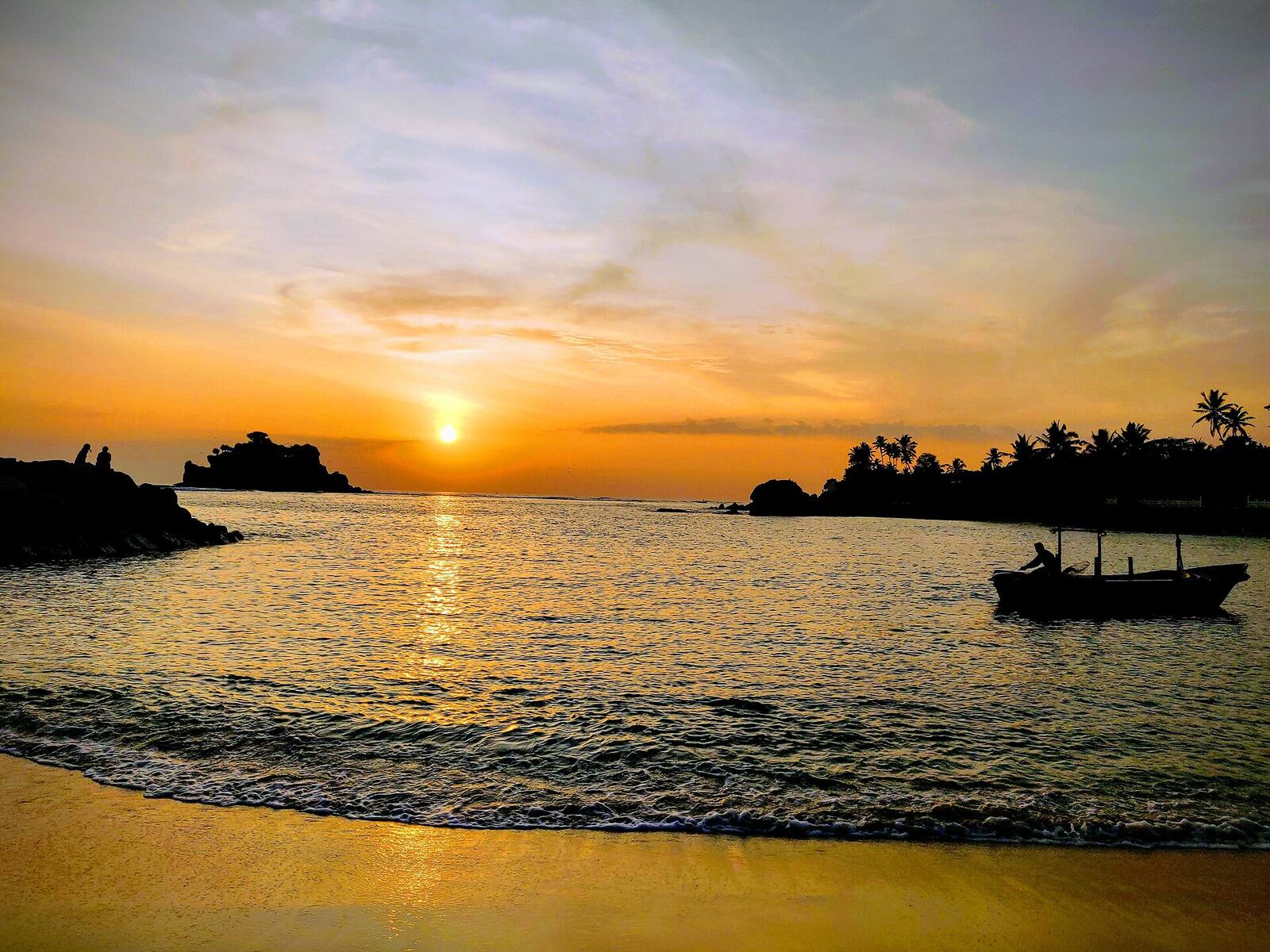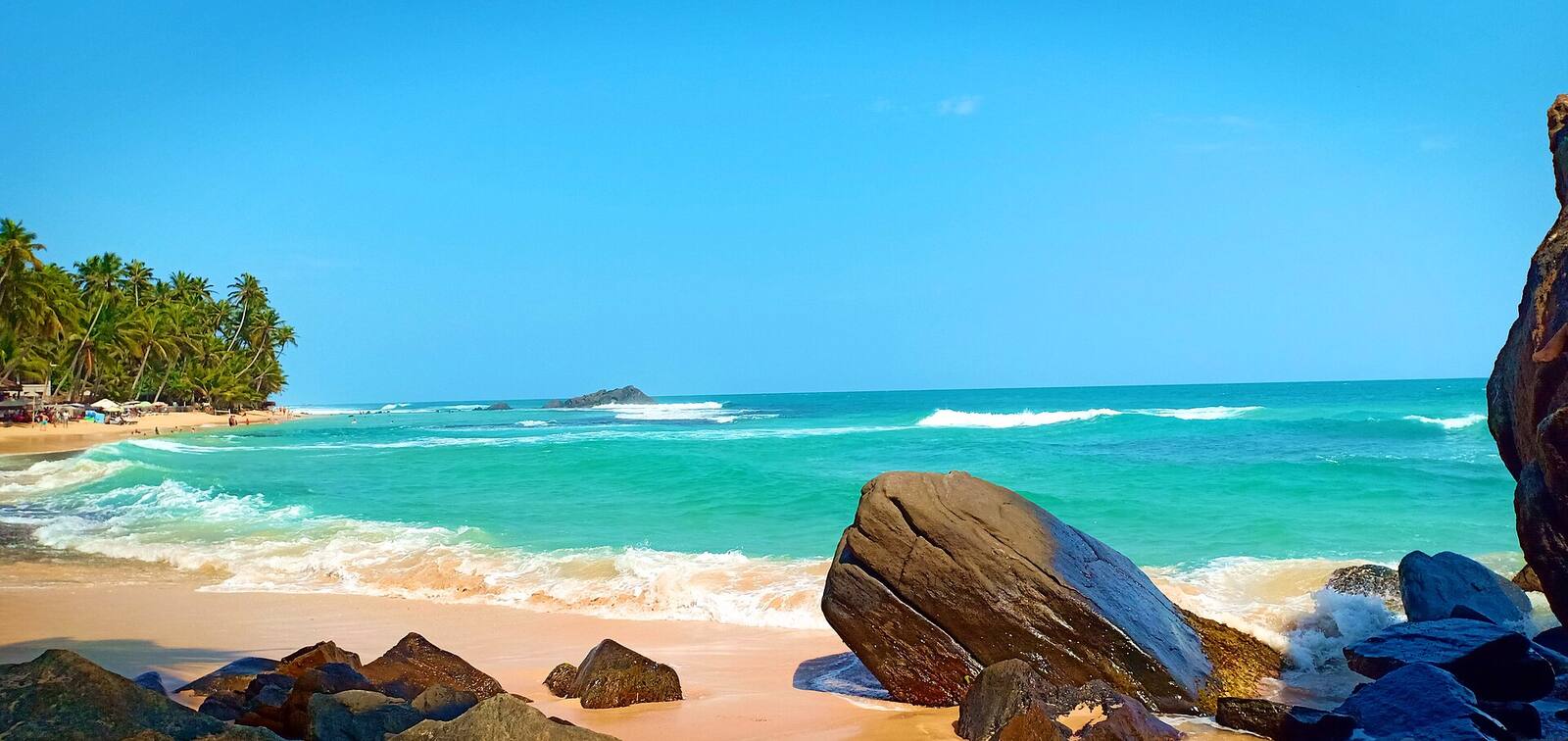
Ahangama is a small coastal town in the Galle District, strung along the coast road between Koggala and Midigama. It has no single sight you must see; its appeal is the combination of surf, good food, stylish places to stay and an easy pace, with the rest of the south coast on the doorstep.
How long do you need?
- 3 days: a couple of surf lessons, Koggala Lake, and Galle Fort at sunset.
- 5–7 days: add whale watching from Mirissa in season, the tea estate, a day at Unawatuna and a safari.
- 2 weeks or more: plenty of people stay a month to surf every day. It is that kind of town.
Ahangama, Weligama or Mirissa?
| Ahangama | Weligama | Mirissa | |
|---|---|---|---|
| Vibe | Laid-back, boutique, surf-and-café | Busy learner-surf beach | Classic beach town, lively |
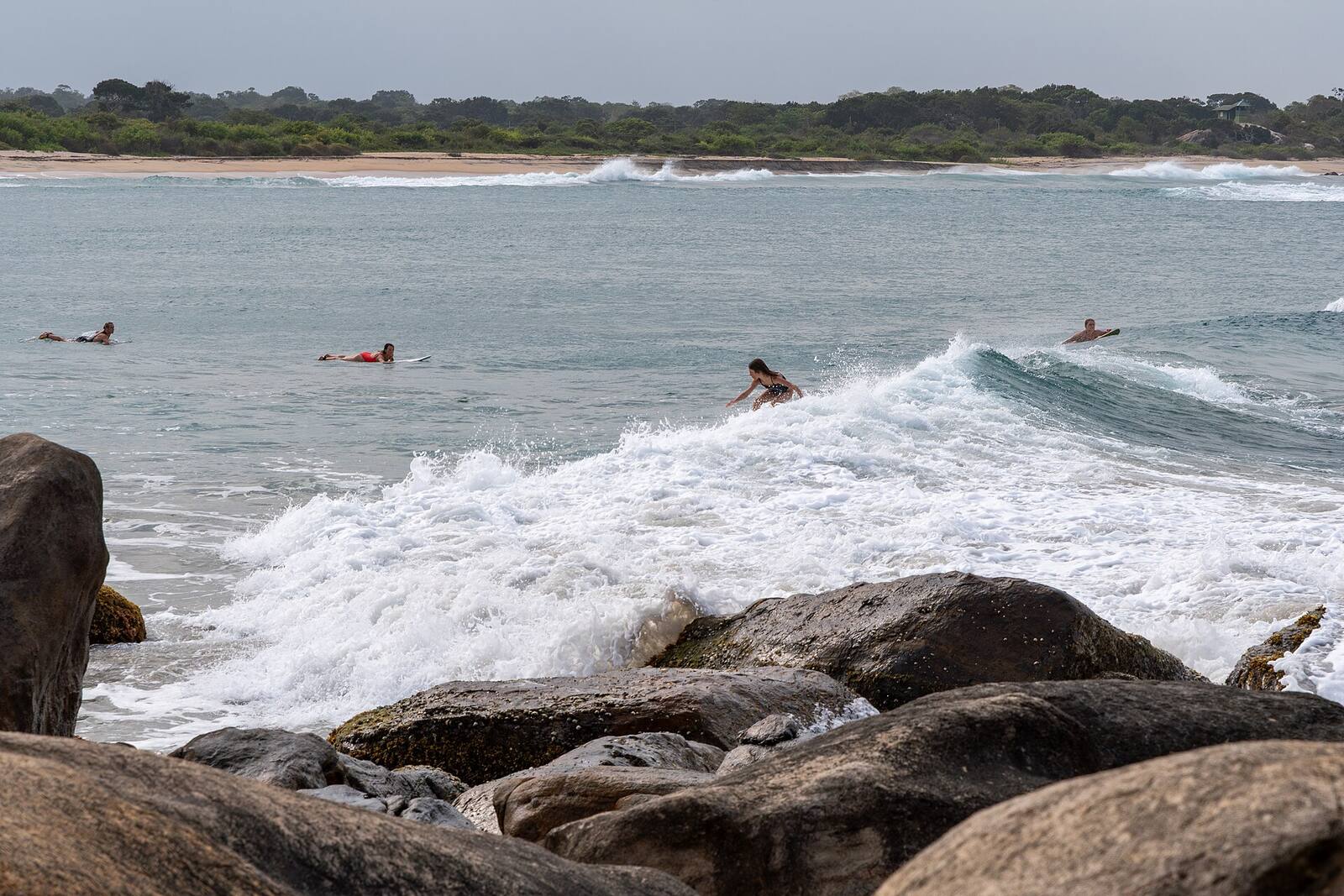
| Surf | Beach break and reefs, all levels | Gentle bay, beginners | Small reef breaks |
| Swimming | Limited, reef and surf | Good on calm days | Good on calm days |
| Nightlife | Quiet | Some bars | The liveliest of the three |
| Best for | Surfers, couples, long stays | First-time surfers | Whale watching, social travellers |
Getting there and around
Allow two and a half to three hours by car from Colombo airport, or take the scenic coastal train. Around town, tuk-tuks are cheap for short hops; agree the fare first. Full details in getting to Ahangama.
What to see and do
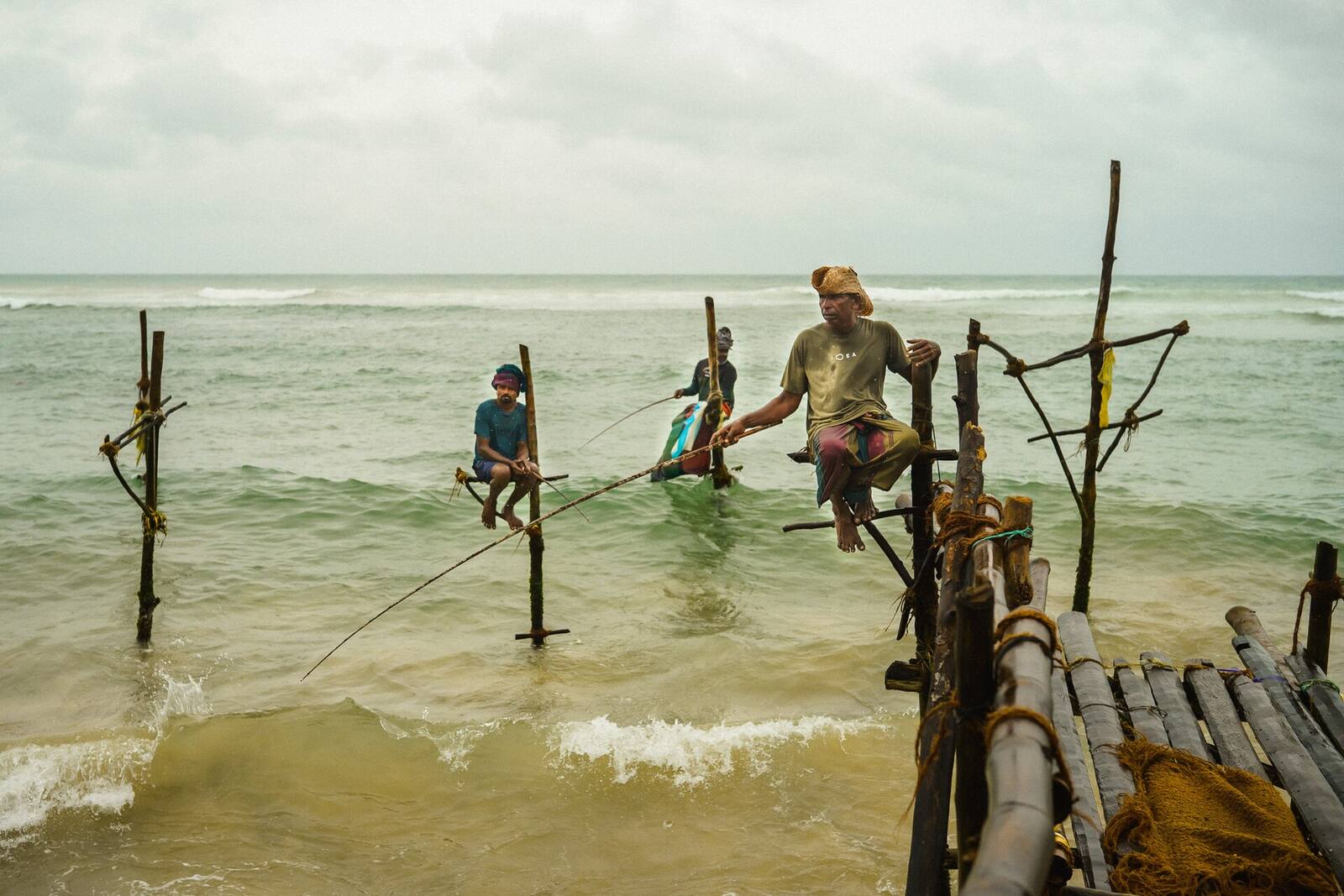
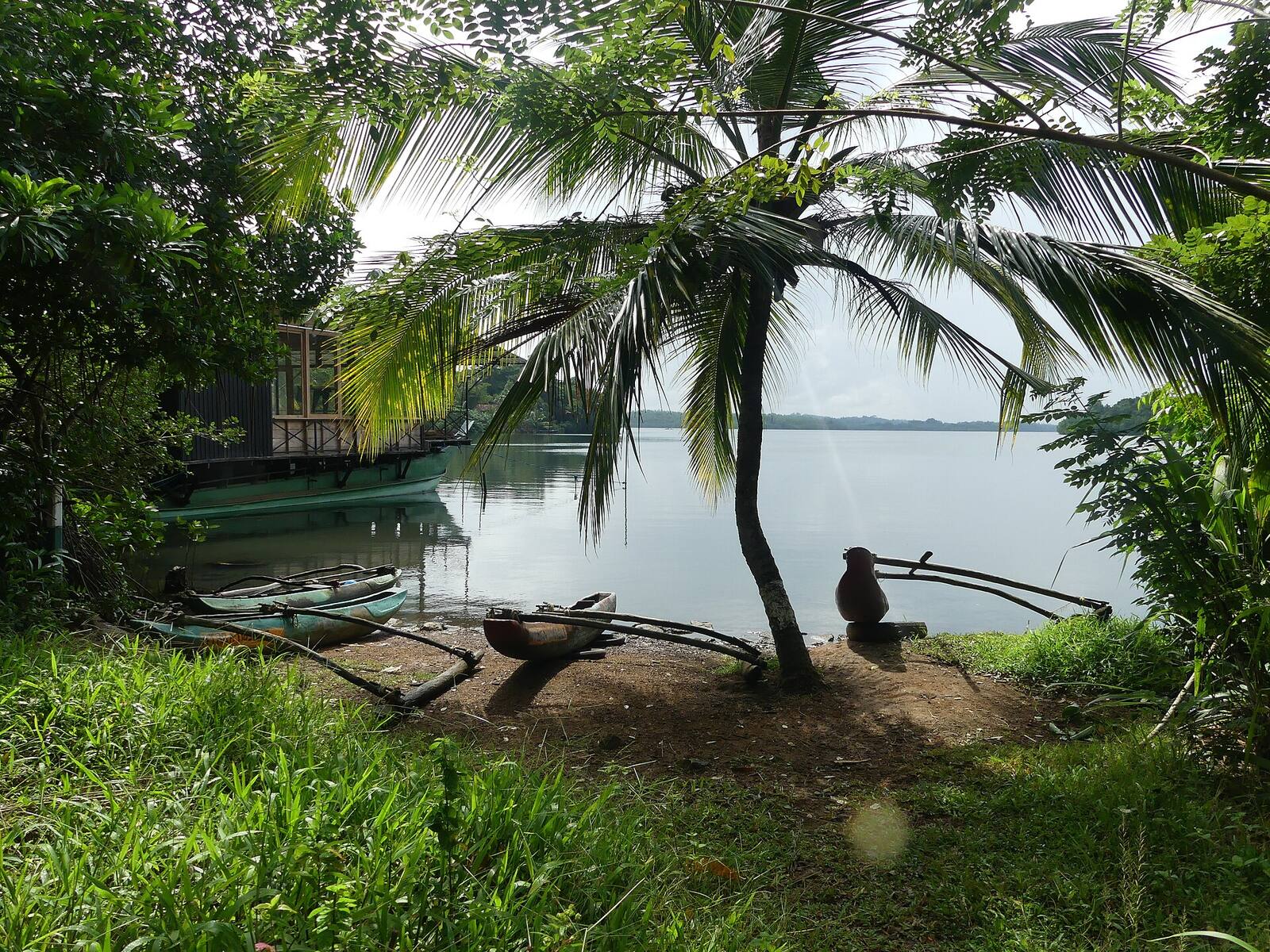
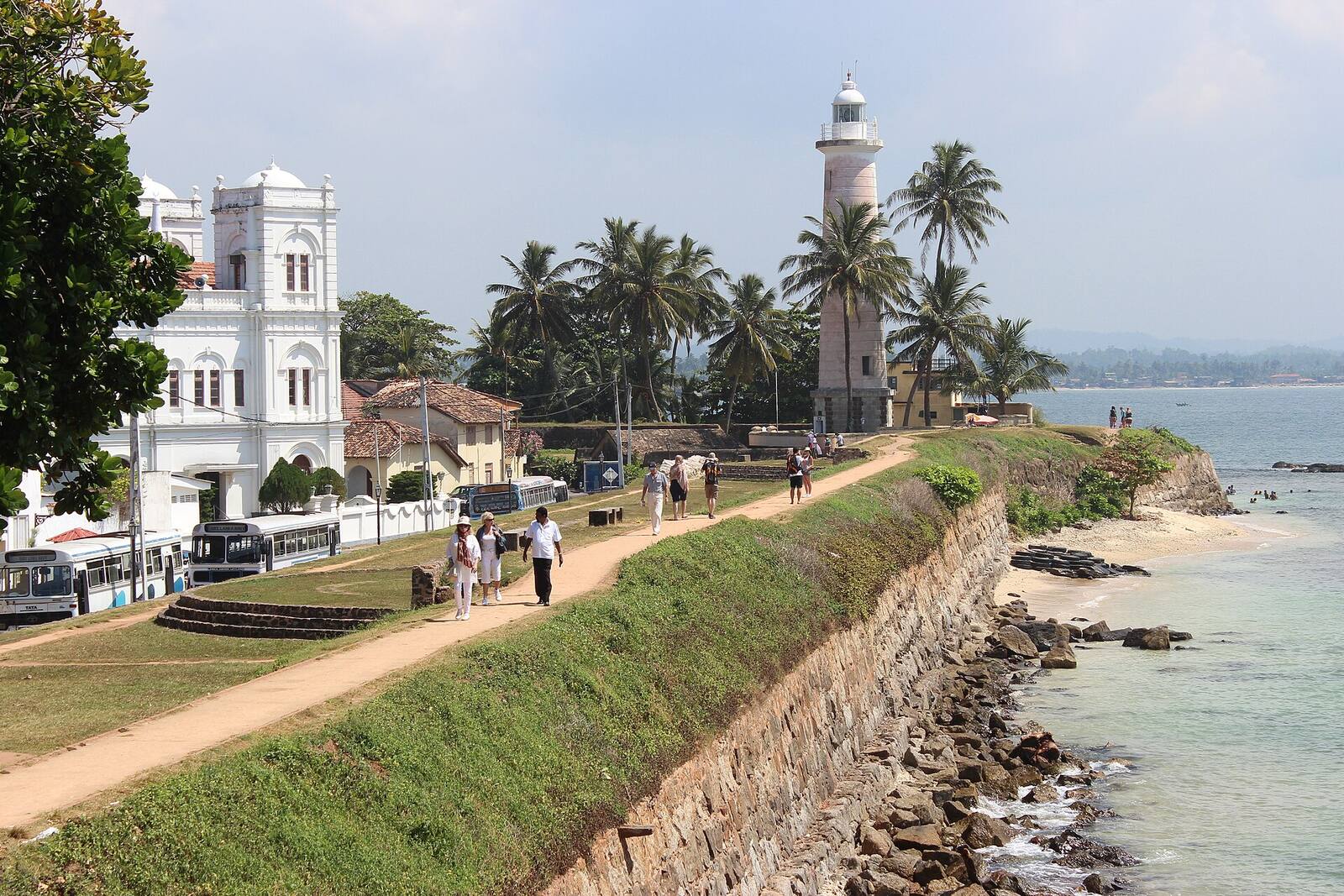
Surf at Kabalana, watch the stilt fishermen, take a boat on Koggala Lake, taste tea at Handunugoda, walk Galle Fort’s ramparts and go whale watching from Mirissa. See all the things to do and our best tours.
Food and drink
Ahangama’s café scene is the best on the coast: smoothie bowls, good coffee and modern Sri Lankan cooking. Do not miss the local food though. Try rice and curry at lunchtime (a plate of rice with several small curries and sambols), kottu roti (chopped flatbread stir-fried on a hot plate, a clattering evening classic), hoppers (bowl-shaped rice-flour pancakes, often with an egg) and fresh king coconut from roadside stalls.
Money, ATMs and prices
- The currency is the Sri Lankan rupee (LKR). There are ATMs in Ahangama town, with more in Galle and Weligama.
- Cards are accepted in most hotels and many cafés; tuk-tuks, small shops and local eateries are cash only.
- Tipping: around 10% in restaurants that do not add a service charge; small tips for drivers and guides are appreciated.
Phone, internet and power
- Local SIM cards with generous data are cheap and sold at the airport; eSIMs also work well.
- Wi-Fi is good in most hotels and cafés, and Ahangama has several co-working spaces for remote workers.
- Power is 230 V. Sockets are a mix of types D and G (and some M); bring a universal adapter.
Entry rules: visas and paperwork
Most visitors need an Electronic Travel Authorisation (ETA) before arrival. Apply only through the official Sri Lankan government channels, never through look-alike agency sites, and check the latest rules before you travel, as fees and exemptions have changed several times recently. Your passport should be valid for at least six months.
Safety and health
- The sea: rip currents and shallow reefs are the main dangers. Swim where locals swim, and never alone at unfamiliar spots.
- The road: the coast road is busy and fast. Take care crossing, and wear a helmet on a scooter.
- Mosquitoes: dengue occurs in Sri Lanka, especially in the rainy months. Use repellent in the morning and evening.
- Sun: at 6° north of the equator the sun is fierce. Use reef-safe sunscreen and a rash vest in the water.
- Get travel insurance that covers surfing if you plan to surf.
Culture and etiquette
- Cover shoulders and knees and remove shoes and hats at temples.
- Never pose for a photo with your back to a Buddha statue, and avoid clothing or tattoos showing the Buddha; both are considered deeply disrespectful.
- Each full-moon day (Poya) is a public holiday, and alcohol is not sold in shops or most restaurants.
- Topless sunbathing is not acceptable anywhere in Sri Lanka.
What to pack
- Reef booties, a rash vest and reef-safe sunscreen.
- Light, loose clothing plus a sarong or long trousers for temples.
- Insect repellent, a refillable water bottle and a universal adapter.
- A light rain jacket from May to November.
Common mistakes
- Expecting a swimming beach right in town. Ahangama is a surf coast; the calm bays are a short ride away.
- Going whale watching out of season (May to October), when the sea is rough.
- Paying for a stilt-fishing photo without agreeing the price first.
- Underestimating safari days. Yala is around three hours each way.
Live availability: top Ahangama experiences
Real-time prices and availability from GetYourGuide. Free cancellation on most experiences.